You recognize the product instantly.
It looks familiar.
And yet something feels… off.
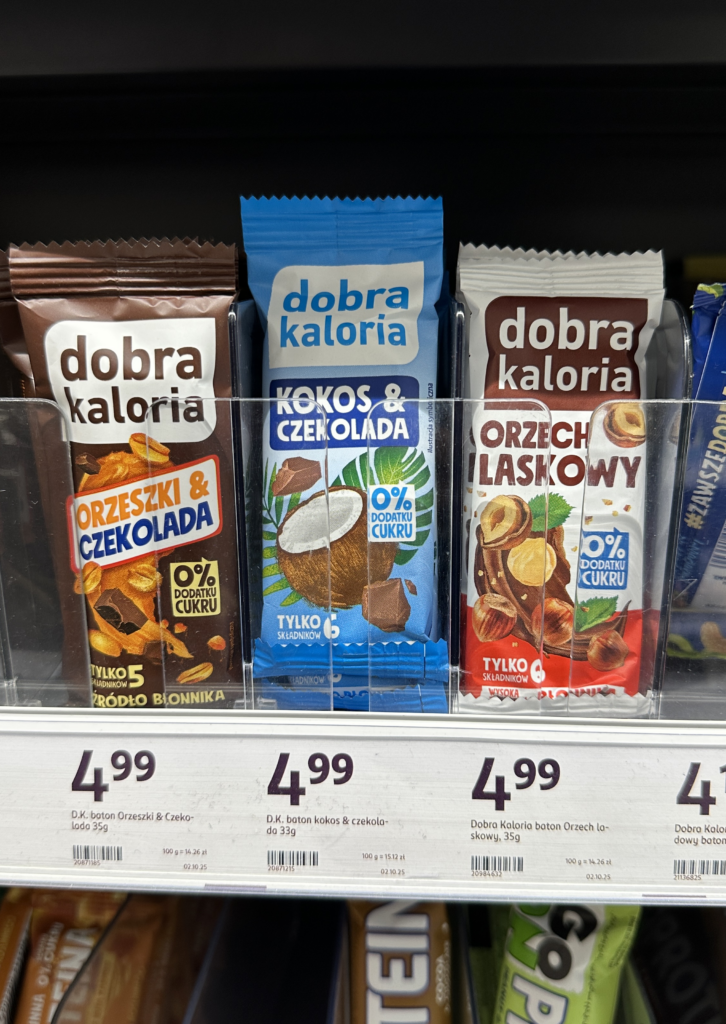
Yes — alternatives.
Standing in a Rossmann store in Poland, I found myself staring at a shelf that felt like déjà vu: three “healthy” snack bars, each very clearly inspired by some of the most iconic chocolate bars ever created. Snickers. Bounty. Kinder Country. Products so deeply embedded in global FMCG culture that you don’t need to read the name — your brain fills in the gaps automatically.
And that’s exactly where it gets interesting.
Case 1: Almost 1:1
In the first case, you could easily mistake one for the other.
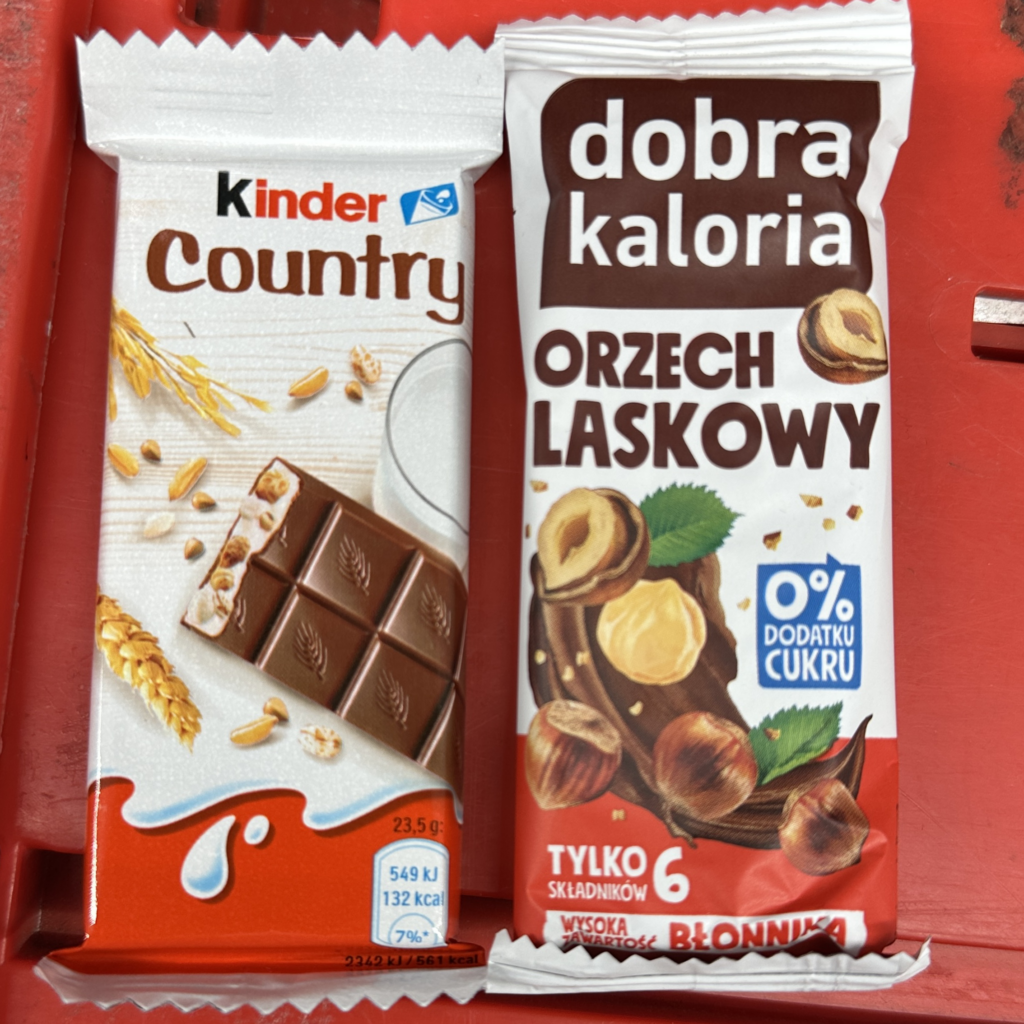
Size: identical!
Colors: same palette, same balance
Graphic layout: logo placement, product shot positioning, flavor communication — all strikingly familiar
Red–white contrast: matched almost perfectly
At first glance, your hand could reach out before your rational brain kicks in.
Is that inspiration — or is it already too far?
Case 2: Comparison by Design
The second example plays a slightly different game.
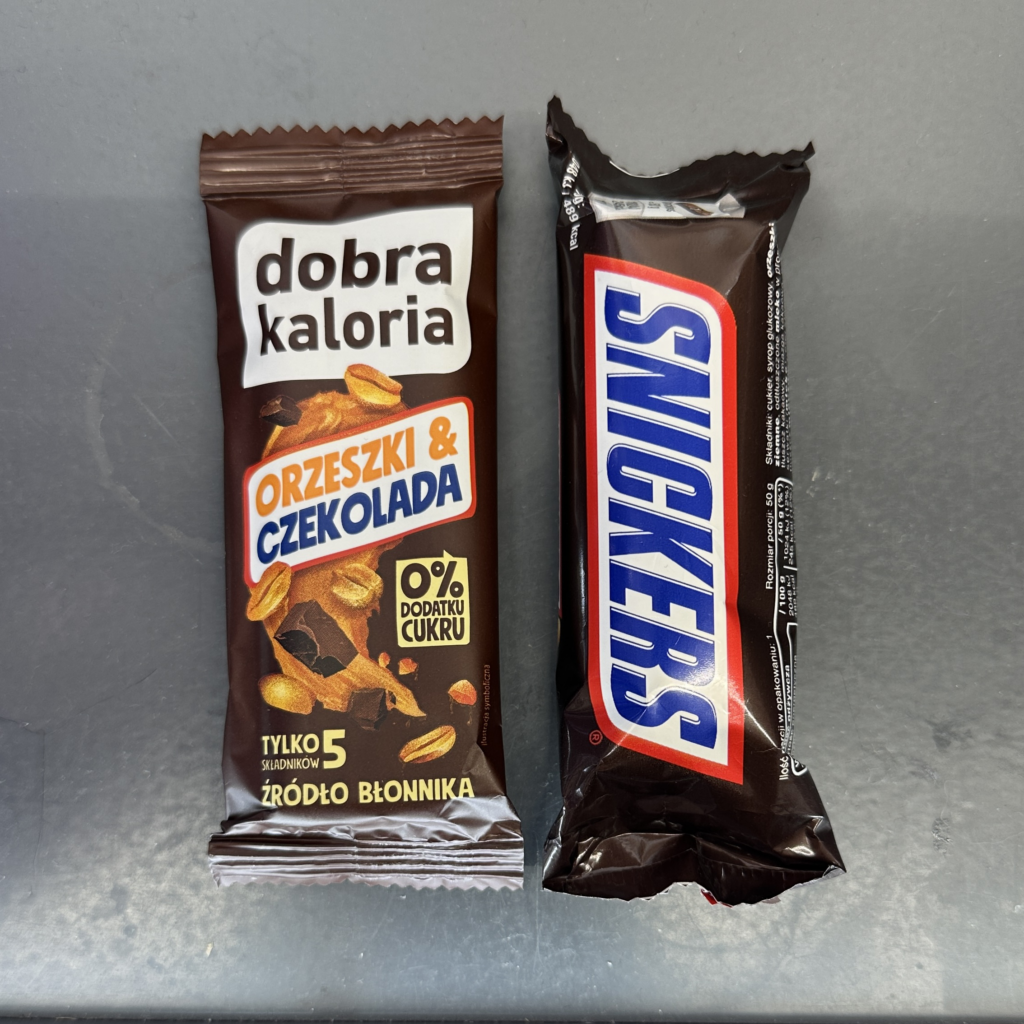
Here, the color coding does most of the work. The visual language immediately invites comparison between the original and the “better-for-you” version. The bar itself is similar in size, but not identical — the original is slimmer, more refined.
This is no accident. This is deliberate shelf storytelling.
Mixed Feelings — and That’s the Point
As an FMCG observer, I have mixed feelings — and that’s not necessarily a bad thing.
1
We live in a free market. Anyone can produce what they want. If consumers are buying these products, that means there is demand. Simple.
And that demand can come from at least two very different motivations:
- Nostalgia with fewer regrets
Consumers miss the taste and emotional comfort of classic bars but want less sugar, simpler ingredients, or better macros. - No comparison at all
Some shoppers may not even consciously link the product to the original — they simply see a healthy bar that fits their needs.
In both cases, there is nothing inherently wrong. Consumers have agency. They choose.
2
But maybe there’s something more interesting happening here.
What if this copy mechanism is actually a good thing?
What if for every “bad-for-you” product, the shelf also offered a credible, healthier alternative — same flavor territory, same usage occasion, same price range?
Decision tree looks like:
- You’re hungry — yes.
- Do you have to buy a sugar-loaded bar — no.
Now the responsibility shifts fully to the consumer. Not because options are limited, but because options are abundant.
Imagine this logic applied consistently:
healthier versions of the most popular sweets
better-for-you alternatives to iconic savory snacks
functional substitutes that don’t feel like punishment
From a public health perspective — that’s powerful.
From a brand strategy perspective — that’s disruptive.
The Numbers Behind the Icons
To understand what’s at stake, it’s worth remembering the scale of the originals:
Snickers (Mars)
    One of the world’s best-selling chocolate bars
  Sold in more than 70 countries

Kinder Country (Ferrero Group)
    Part of a portfolio that generated €17+ billion in revenue (2023)
    Kinder is among the top 5 confectionery brands globally
    Especially strong in Europe, where brand trust is exceptionally high

Bounty (Mars)
    A cult classic with coconut lovers worldwide
    Strong emotional equity built over decades
When you “borrow” from brands of this magnitude, you’re not just borrowing design — you’re tapping into decades of mental availability built with billions in advertising spend. ANd here comes the question:
Inspiration vs. Imitation: Where Is the Line?
And this brings us to the uncomfortable but necessary question:
Where is the real border between inspiration and copying?
Is it the flavor combination?
The packaging design?
The color system?
The overall “look & feel” at shelf distance?
There is no universal formula — only context, intention, and consumer perception.
And perhaps that’s the most fascinating part.
Because in the end, the shelf doesn’t ask for legal arguments.
It asks one simple question:
Which bar will the consumer pick — and why?
And increasingly, the answer may be:
“The one that feels familiar… but makes me feel better about myself.”Thoughts?
Leave a Reply