The answer is a resounding YES.
Walking the aisles today, I spotted a perfect example: basic flour transformed into a “crafted” essential for culinary enthusiasts.
If you’re a foodie aiming for that perfect Neapolitan pizza or a delicate sponge cake, you don’t want just flour; you want a premium ingredient that respects your craft.
Battle: Standard Flour vs Premium Flour
Let’s look at the hard-comparison:
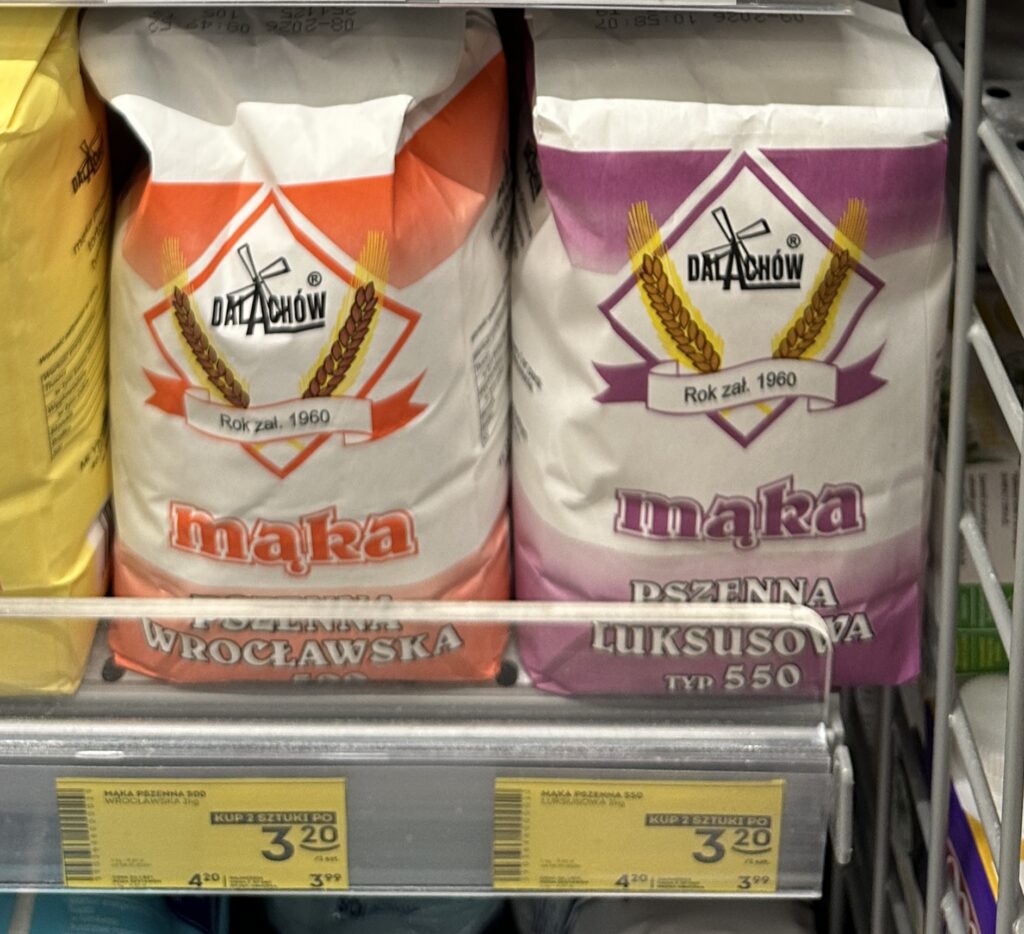
STANDARD (Młyn Dalachów)
- Weight: 1kg
- Price: 3.20 PLN
- Price per KG: 3.20 PLN PLN/kg
- Packaging Format: paper bag
- Convenience: Low – Requires storage container after opening
- Brand Identity: Heritage, Reliable, Commodity
- Shelf Impact: Low (Blends with category standard)
- Target Audience: Price-conscious families, traditional cooks
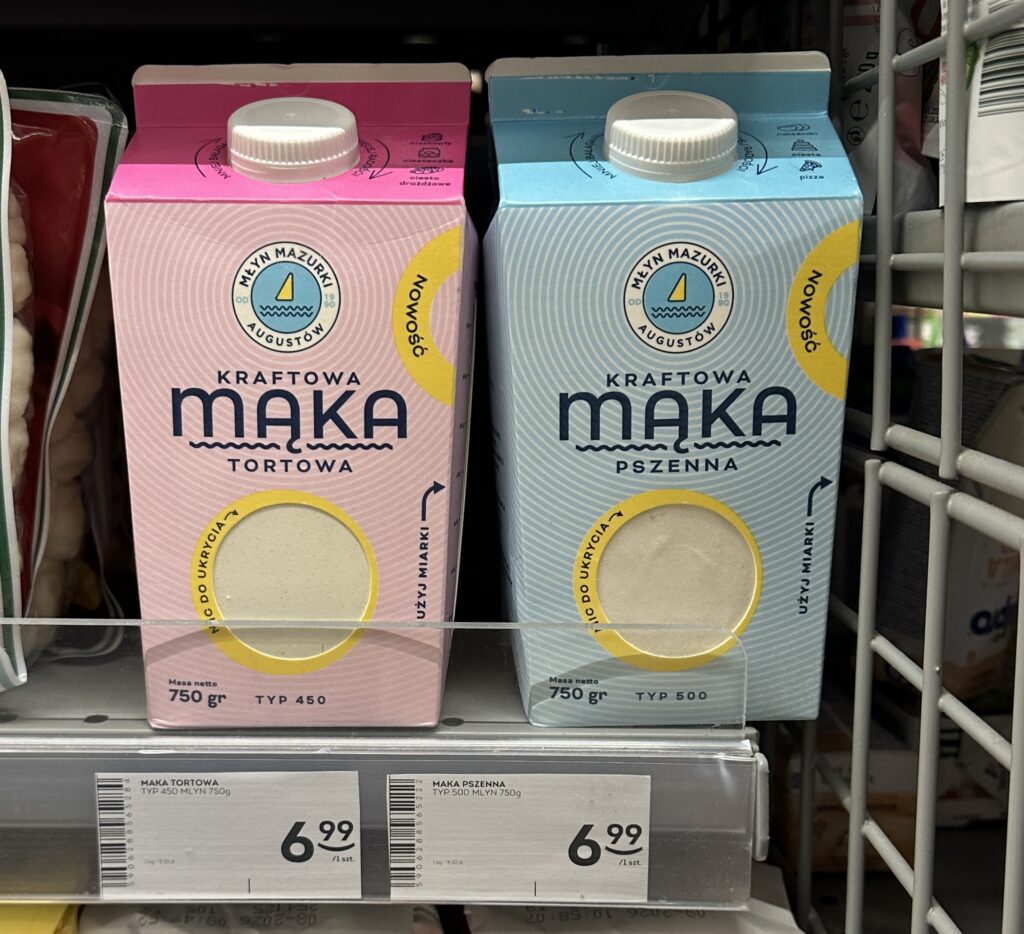
PREMIUM (Młyn Mazurki)
- Weight: 0.75kg
- Price: 6.99 PLN
- Price per KG: 9.32 PLN/kg
- Packaging Format: paper bag
- Convenience: High – Easy to store, easy pour
- Brand Identity: Modern, Premium
- Shelf Impact: High (Unique shape/color)
- Target Audience: Urban “foodies,” hobbyist bakers
How do you turn an “unsexy” commodity into a foodie’s holy grail?
It’s all about solving the “pain points” of the traditional shopping and cooking act. Let’s look deeper.
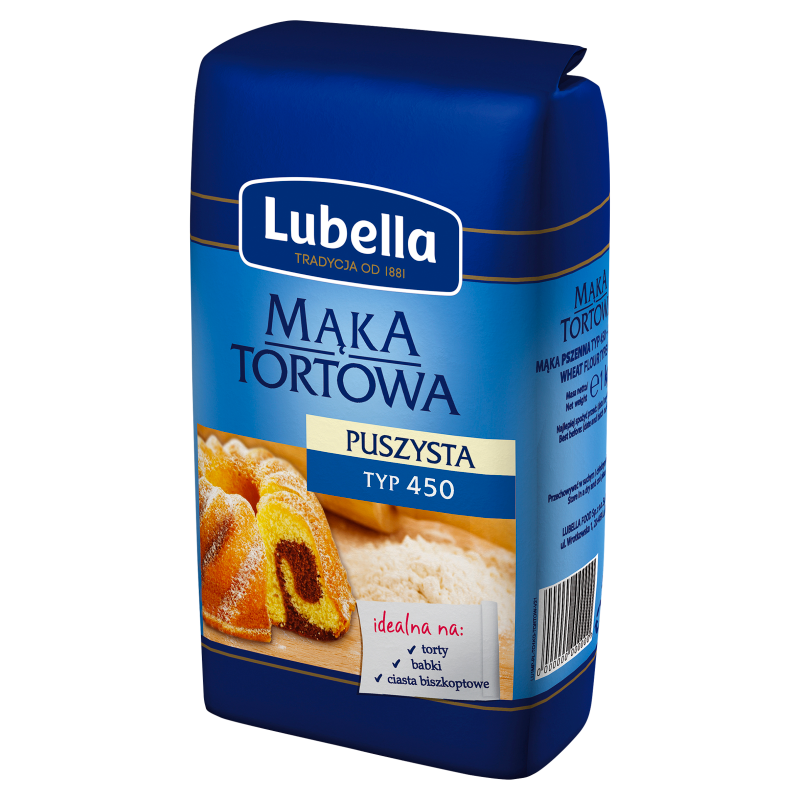
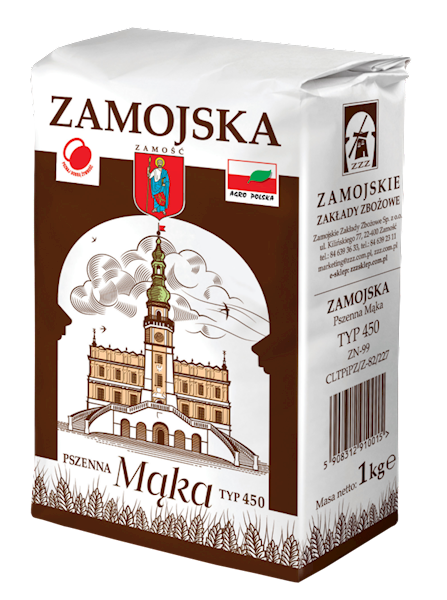
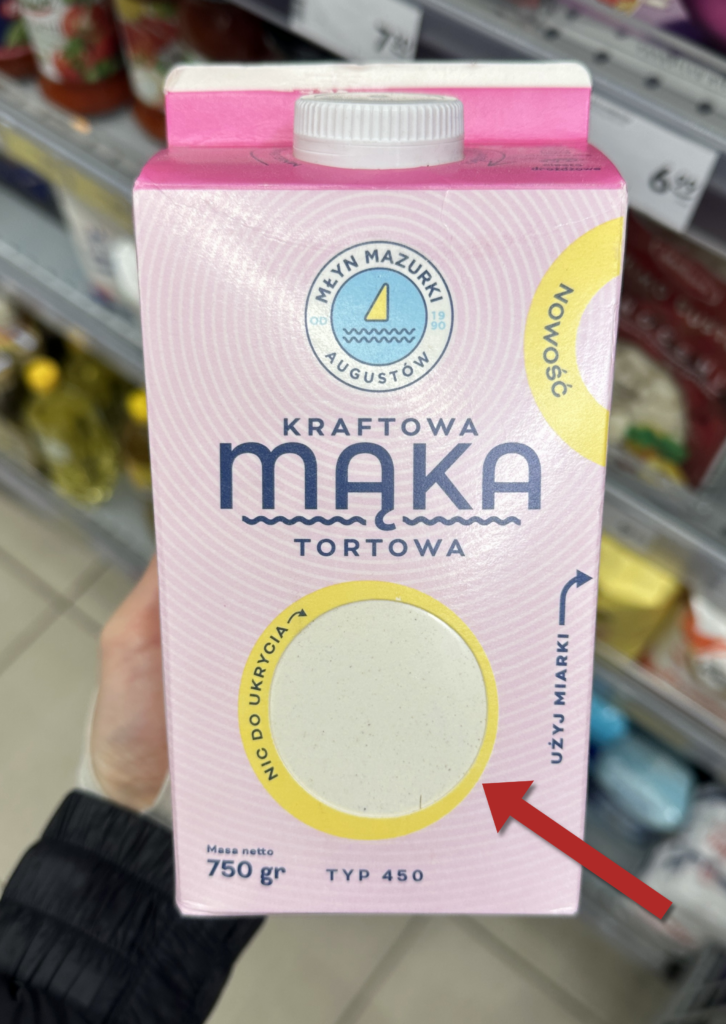
Visual Identity | While most competitors cling to 19th-century nostalgic illustrations, Młyn Mazurki went bold and modern. The pastel palette and clean typography appeal directly to Millennials and Gen Z.
Typical Designs of Flour Product:
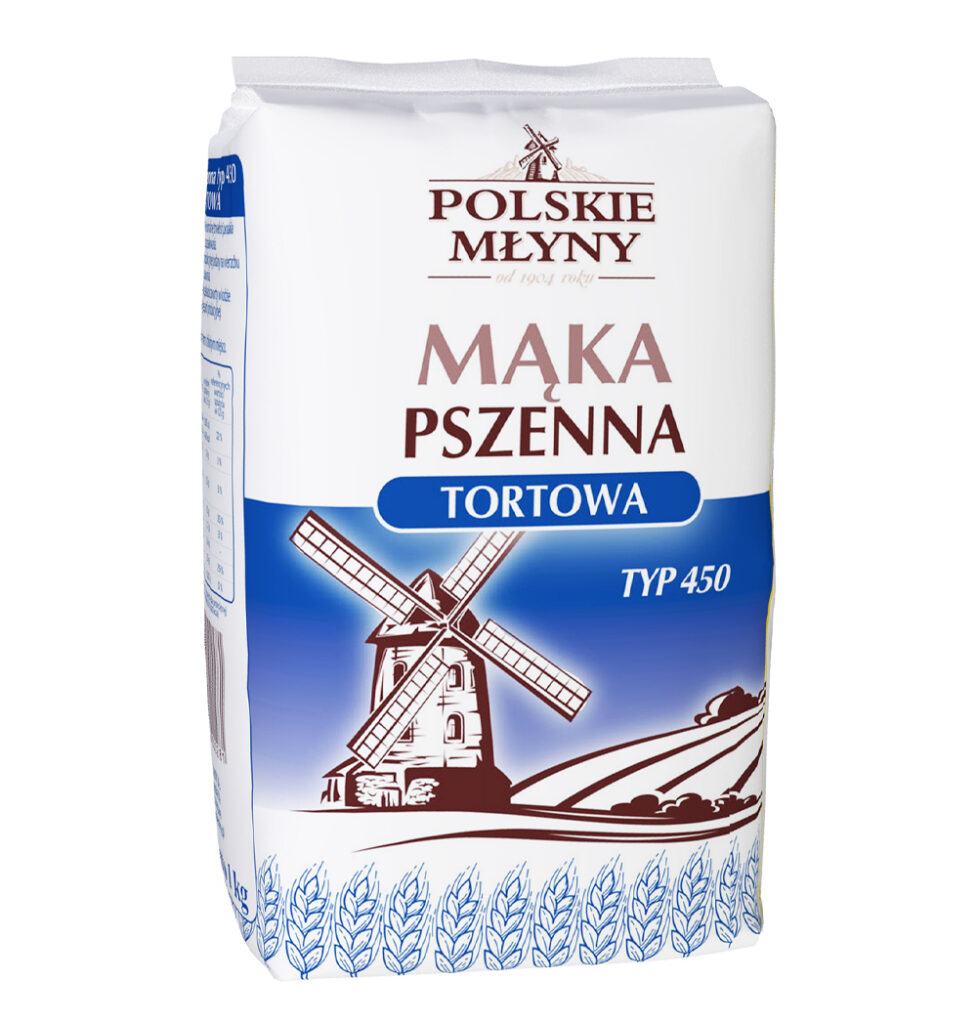
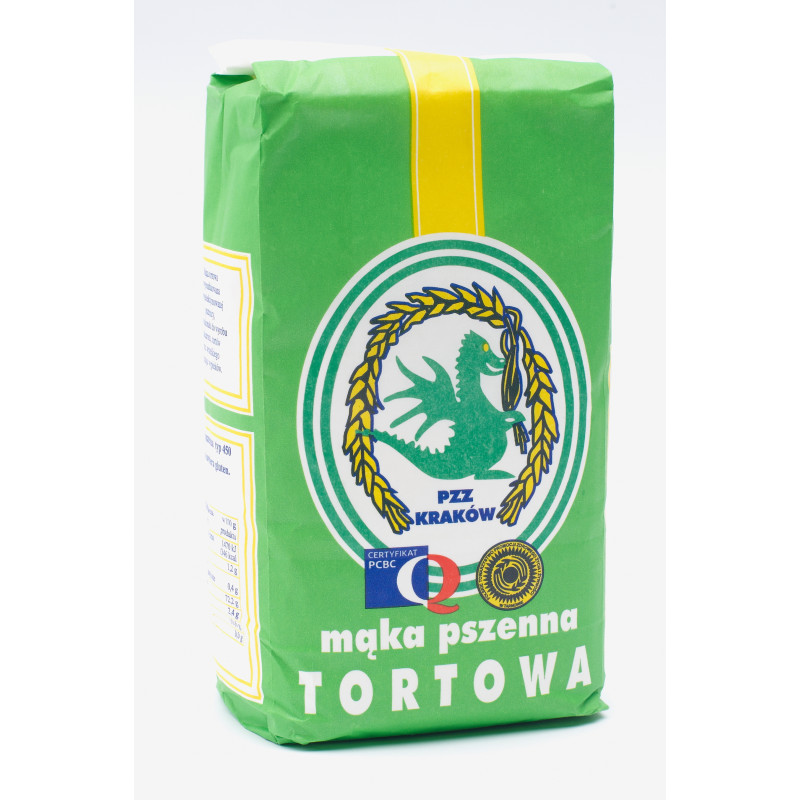
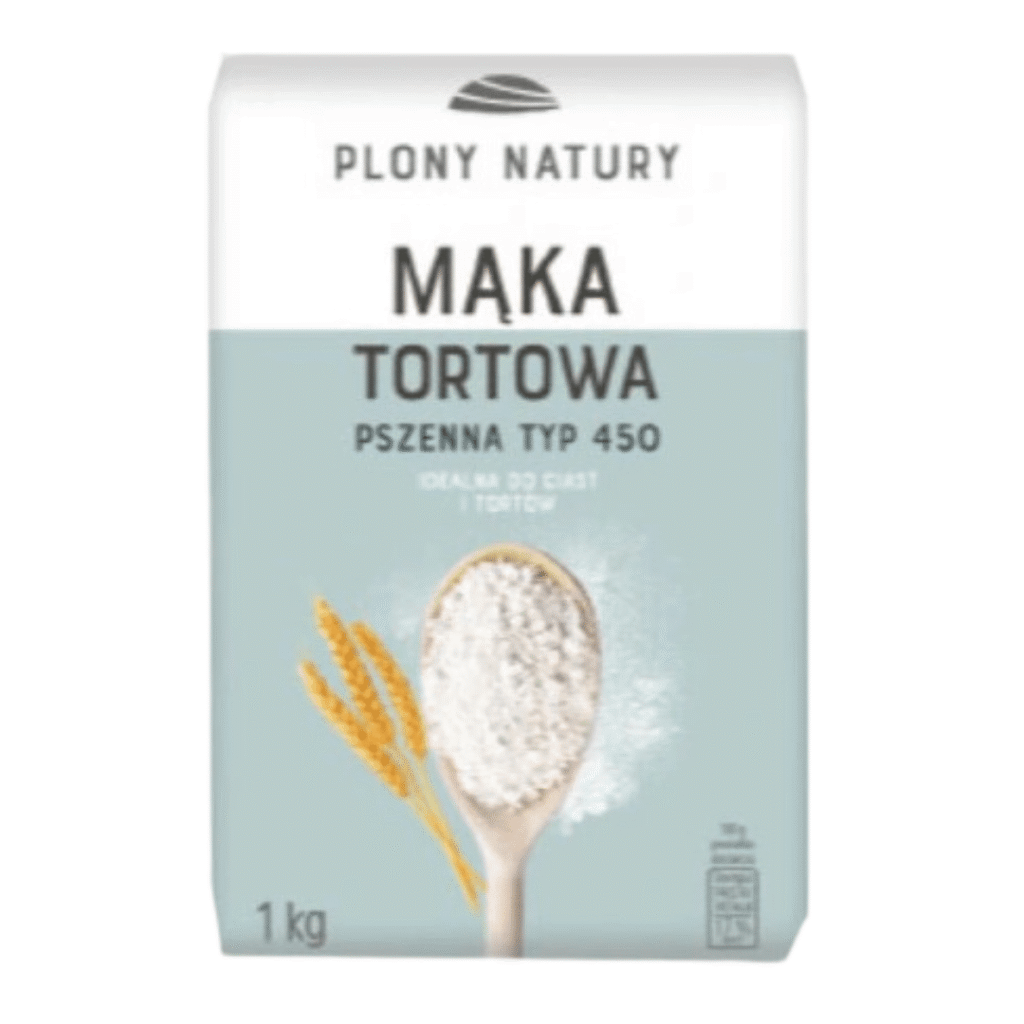
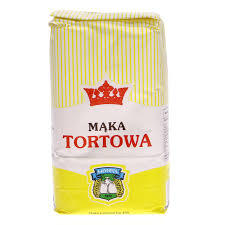
The “Trust Window“| By including a transparent circular window on the front, they eliminate the “mystery” of the content. You see the texture and purity before you buy. In a category prone to moisture or pest issues, this is a massive trust-builder.
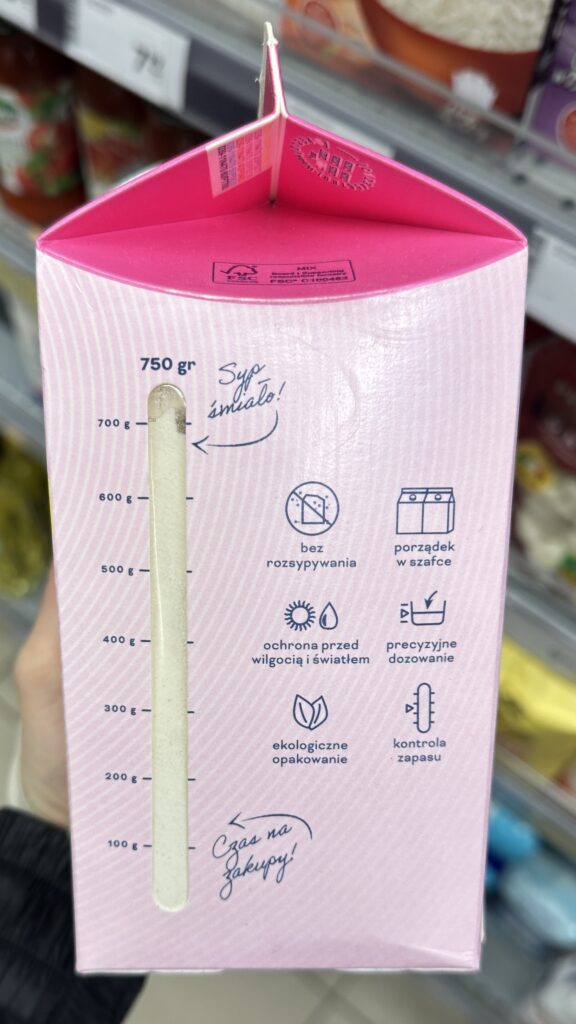
Tetra Pack – multiple benefits:
- Precision Pouring – The plastic cap allows for controlled dosing. No more “flour clouds” or accidental spills.
- The Integrated Scale – The side of the pack features a transparent strip with a weight scale. It’s a genius move for the “weight-scale-less” kitchen.
- Container itself – It eliminates the need for the consumer to transfer the product into a separate glass jar.
- Climate Shield – Unlike paper, this packaging offers a barrier against UV light and humidity, ensuring the flour remains its quality.
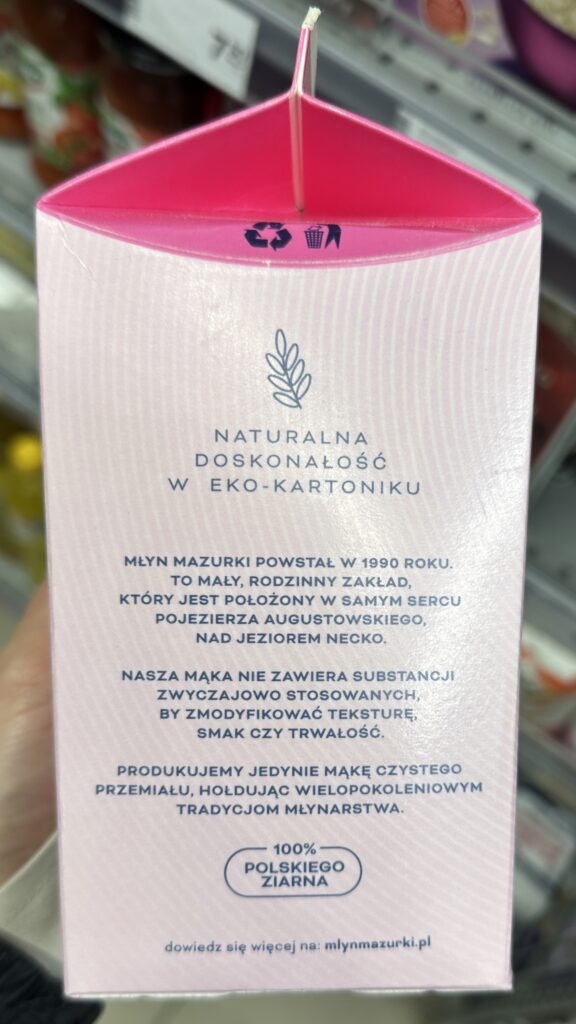
The “Emotional” Premium | The side panel isn’t just text; it’s a manifesto.
Producer highlights their location in the heart of the unpolluted Lake District, near Lake. In FMCG, “origin” equals “quality.”
Company states the absence of artificial substances used to modify texture or taste. Another extra points to prove the quality.
By usage of eco-carton producer align with the growing consumer demand for responsible packaging, even in the baking aisle.
Others:
- Lighter than standard 1kg – At 750g, it’s lighter and more ergonomic for the “occasional baker” or the urban shopper on foot.
- Clean shopping experience -Traditional paper flour bags often leak, leaving a white trail in the shopper’s bag. This carton is “clean-bag” guaranteed, improving the post-purchase experience.
- Control BBD – Very easy to control Best Before Date after buying the product as it is printed on the top and visible.
- Price advantage – format of 750g allows for a more competitive price point compared to a full 1kg premium bag, while maintaining a higher margin per gram (with same margin 1kg product would be 9.32 PLN/kg so in customer rounding this is like 10 PLN)
Now – Reality Check – Innovation or Illusion?
While the “Młyn Mazurki” execution is a masterclass in consumer psychology, we must look beneath the pastel surface to see the strategic trade-offs being made.
- The Greenwashing Trap & The “Eco” Paradox
The packaging proudly claims to be an “eco,” but from a circular economy perspective, this is a classic case of greenwashing. While a traditional paper flour bag is 100% compostable and easily recycled in a single stream, a Tetra Top® is a complex multi-layer composite of paperboard, plastic, and sometimes aluminum.
It is one of the most difficult materials to process in standard recycling facilities.
By moving from paper to plastic-capped cartons, the brand has actually increased the environmental footprint of the product while marketing it as “natural perfection.”
- The “AI Design” Margin Maximizer
We are entering an era where “premium” aesthetics have a lower barrier to entry than ever before. With the high availability of AI-driven graphic design tools, creating a “modern, minimalist, Gen-Z-friendly” look costs almost nothing in terms of creative overhead. The real innovation here isn’t the art—it’s the format change. By dropping the weight to 750g and wrapping it in a “high-tech” carton, the producer successfully masks a significant price-per-kilo hike. It’s a brilliant enabler to maximize profit margins under the guise of “craft” quality.
- The Future of Convenience: The “Middle Ground” Strategy
This product signals a fascinating shift for convenience stores (Zabka, 7Eleven, etc.). Should these stores focus on “Ready-to-Eat” (RTE) or “Ready-to-Cook” (RTC) premium ingredients?
The Compromise – This flour represents a middle ground. It’s for the foodie who finds restaurant prices too high but refuses to settle for the low quality of a microwaveable meal.
Convenience stores are becoming “culinary hubs” for the quality-conscious shopper. Offering premium ingredients in “small-batch” formats (like 750g) allows consumers to create a “better-than-restaurant” meal at home without the waste of bulk buying.
Final Thought
Młyn Mazurki has successfully gamified the baking act. They’ve turned a messy chore into a precise, aesthetic experience. It’s a win for the profit margin and the user experience, even if the planet takes a back seat in the process…
Leave a Reply