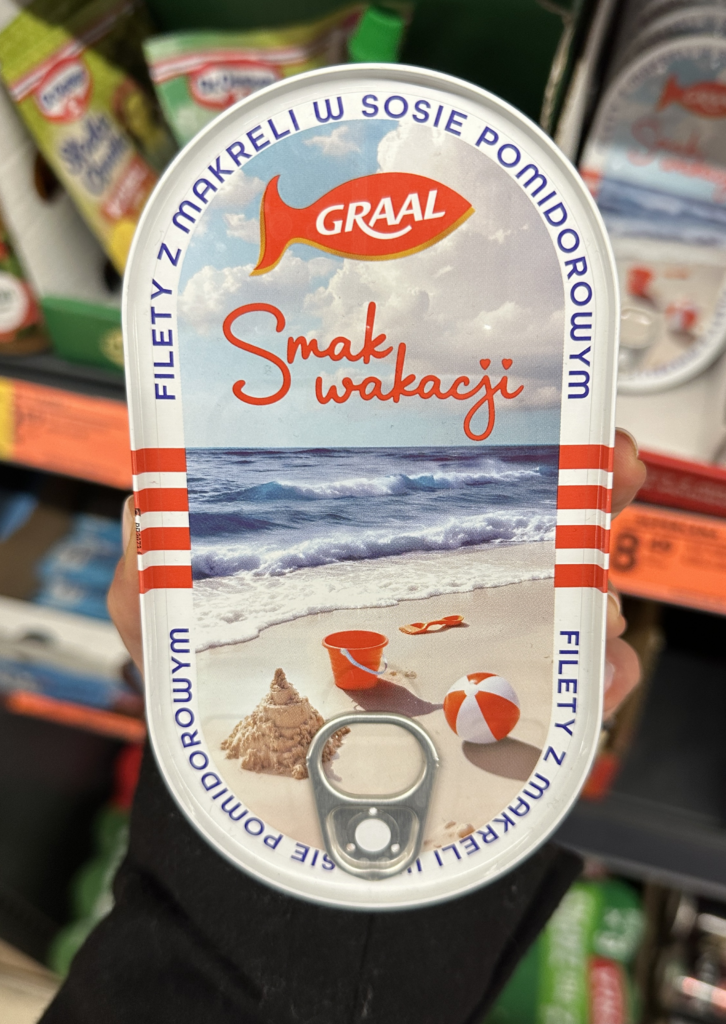
During a recent visit to a Biedronka discounter store, I encountered a canned fish product that immediately stood out from the shelves— for its unconventional packaging. Instead of the traditional product photography we are all used to, the label featured a serene beach scene complete with sun, sand, and summer toys.
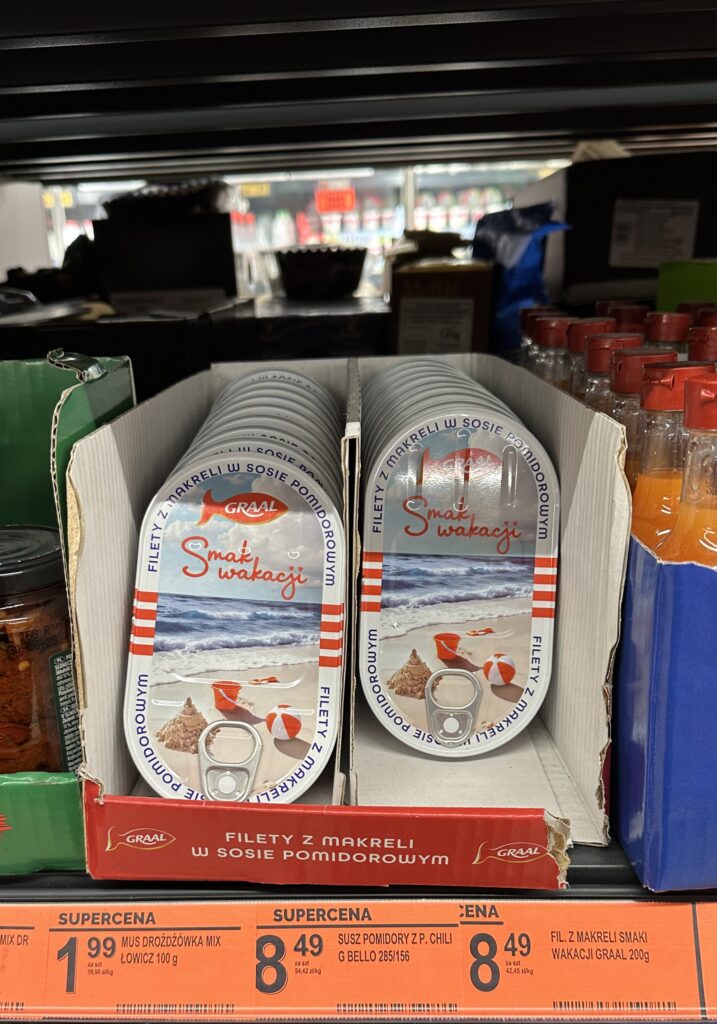
It was a curious choice that sparked an important question: in an increasingly competitive FMCG market, can emotional design justify premium positioning?
Emotional Branding: A Risky Gambit in the Discount Sector
The packaging strategy raises an intriguing paradox. Traditional FMCG wisdom suggests that product imagery—showing the actual contents—reduces purchase friction and builds consumer confidence. Yet this product abandons that convention entirely. Instead of mackerel fillets, consumers see a beach landscape.
Isn’t it confusing?
Potentially.
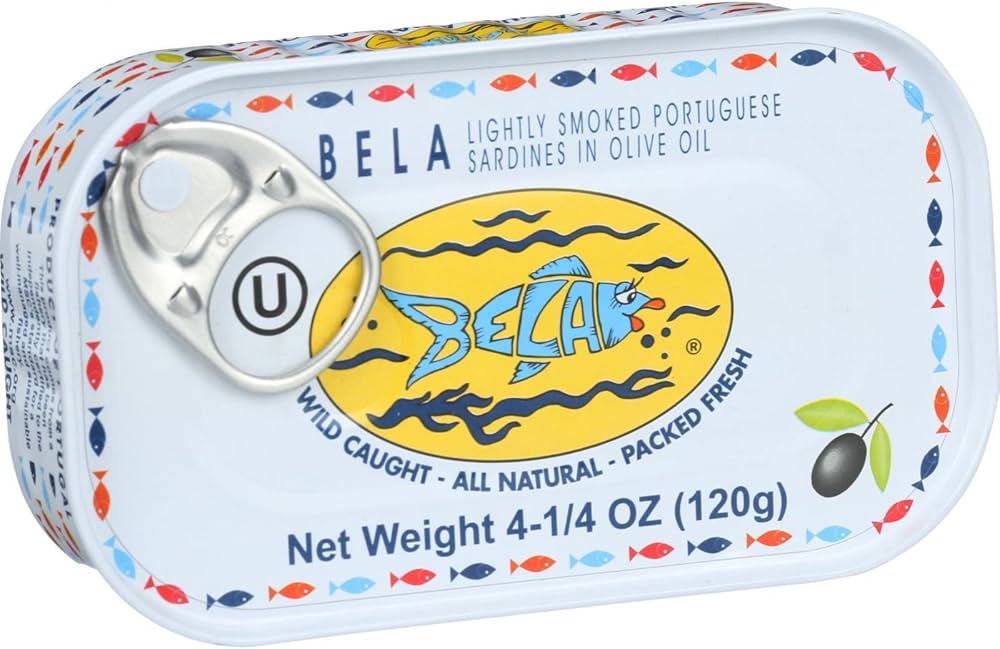
However, it’s also strategically calculated. The design taps into what behavioral economists call “emotional congruence”—the association between eating fish and the sea. This approach mirrors successful premium brands like
Bela Olhao (Portuguese sardines)
Berthe (Portuguese sardines)
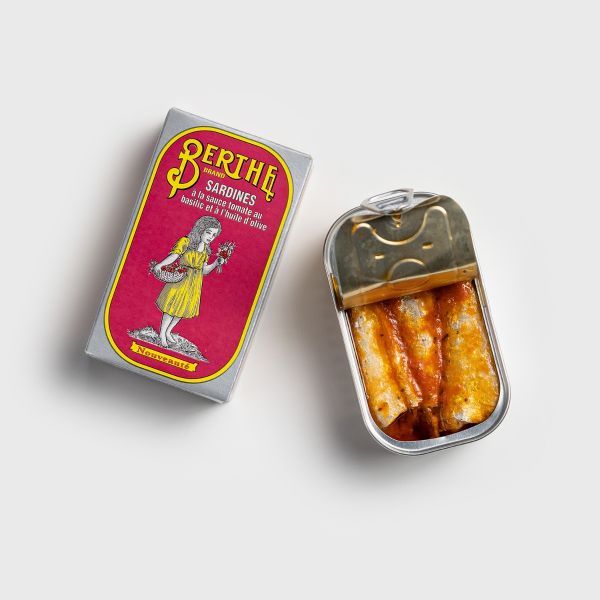
which have built strong market positions through lifestyle imagery rather than product shots.
In the discount channel, where price-conscious consumers dominate, such premium positioning is unconventional. Yet it signals quality differentiation—a critical factor when competing against private-label alternatives.
The Price Paradox: When Premium Packaging Offers Better Value
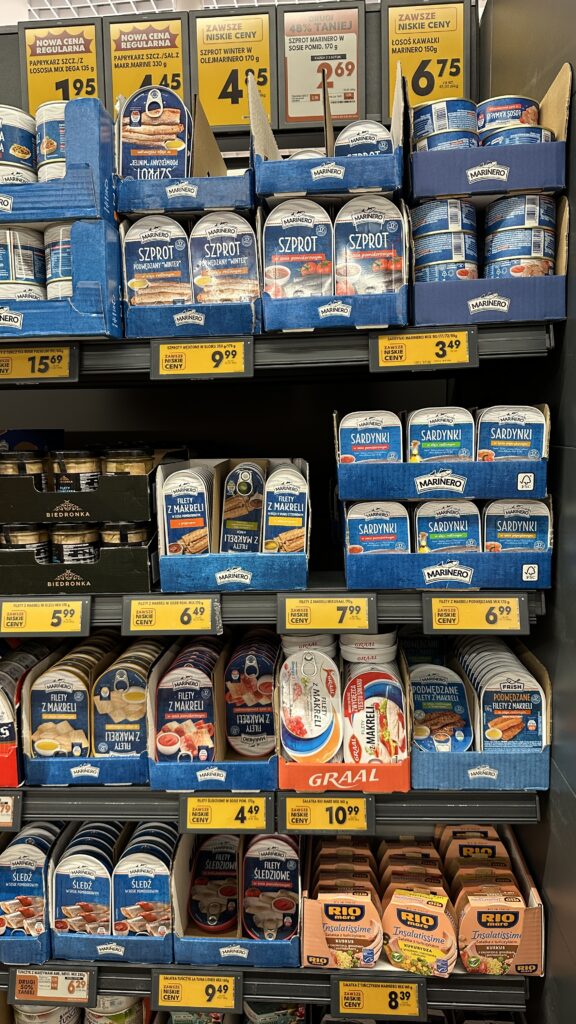
Here’s where the analysis becomes genuinely interesting.The price of this product is 8,49 PLN for 200g, when at the same time “same” product (mackerel fillet) costs:
7,99 PLN for 170g – same producer (Graal)
6,49 PLN for 170g – private label of discounter (Marinero by Lisner)
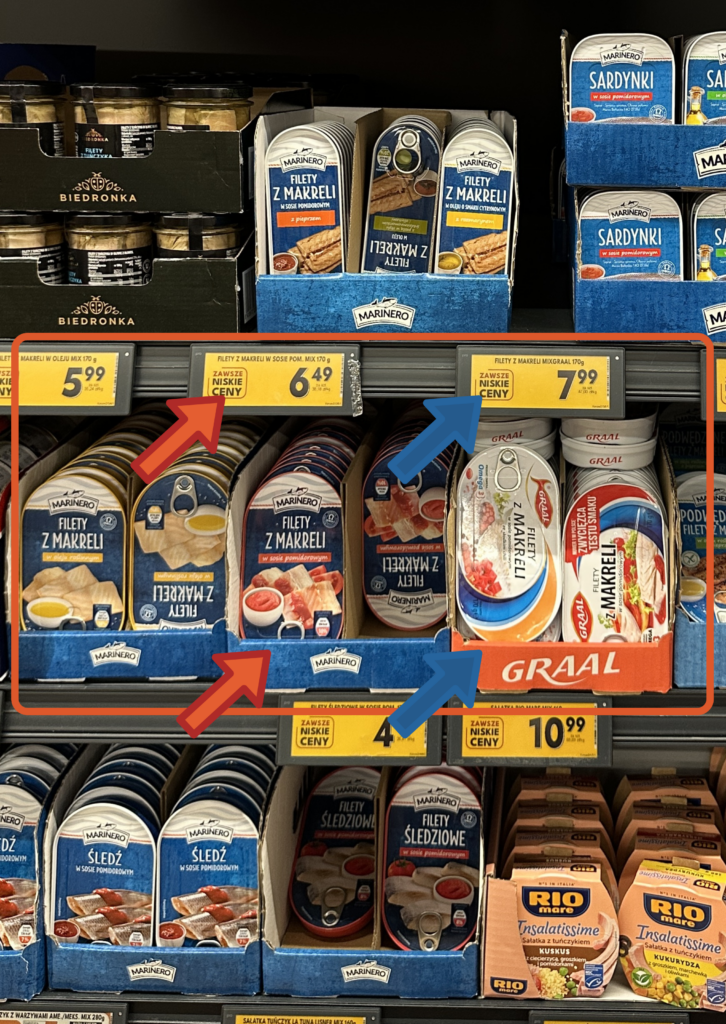
Let’s examine the per-kilogram pricing:
The data reveals a counterintuitive finding – the premium-packaged 200g product is actually 10.7% cheaper per kilogram than the same producer’s 170g offering. This pricing strategy—larger pack at lower per-unit cost—isn’t it an FMCG tactic designed to drive trial among price-sensitive consumers while maintaining perceived quality through design?
The private-label Marinero remains the most economical choice at 38.18 PLN/kg, approximately 11.2% cheaper than the premium design product and 23% cheaper than the name-brand 170g version.
The Psychology of Premium Discounting
This pricing structure reveals sophisticated consumer segmentation. The brand is essentially offering three distinct value propositions:
- Emotional/Aspirational Value: The premium design appeals to consumers seeking quality signals and lifestyle alignment, willing to pay a modest premium for perceived superiority.
- Rational Value: The 200g pack offers better per-kilogram pricing than the smaller branded alternative, appealing to value-conscious shoppers who also appreciate quality cues.
- Pure Economy: The private label serves price-maximizers with minimal brand loyalty.
Nostalgia as a Market Differentiator
The decision to purchase this product becomes more about consumer self-identification. The beach imagery doesn’t obscure the product—it clarifies the brand’s positioning. It says: “This is not just preserved fish; this is a sensory memory of leisure and quality.
In Poland’s increasingly competitive discount retail environment, where private labels capture 35-40% of FMCG sales (Source: GfK Poland, 2024), branded products must justify their premium through more than just product quality. Emotional design, when paired with competitive pricing, becomes a legitimate differentiation strategy.
So yes, buying beautiful memories with even better per-kilogram pricing than the alternative branded option? That’s not just nostalgia—it’s smart shopping.
Leave a Reply