Why the Moving Feast is a Company's Greatest Nightmare (and how to change it)
Navigating the Most Volatile Window in the FMCG Calendar
Easter is arguably the most complex period for any Forecasting or Demand Planning team. In my 5+ years of international FMCG experience, I've seen even the most sophisticated systems stumble during this "moving feast." To manage it successfully, you need more than just data — you need a deep understanding of the "Pattern" and the logistical friction that occurs behind the scenes.
The "Moving Target" Problem: Why Algorithms Struggle
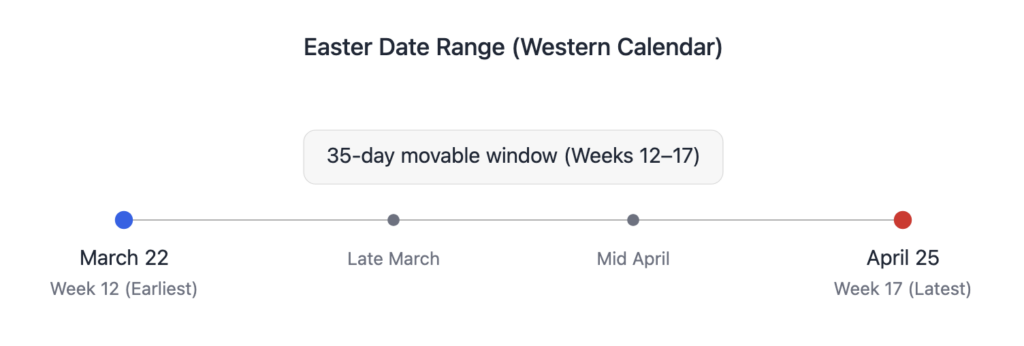
The primary challenge of Easter is its timing. The earliest possible date is March 22nd (Week 12), and the latest is April 25th (Week 17). This five-week variance means that seasonal patterns cannot simply be "copied and pasted" from the previous year.
While a human planner looks at the calendar and thinks, Ah, spring is here — Easter is coming, a standard Machine Learning algorithm often fails to make that connection unless it is fed specific Independent Variables. Without a "Holiday" indicator or a system linked directly to global calendars, AI cannot proactively find these dates without human intervention. To get a reliable forecast, your Advanced Planning System (APS) must be "taught" that these weeks are outliers.
The Cluster Complication: Navigating Regional Rules
Planning becomes significantly "messier" when you manage a cluster of countries rather than a single market. Take Iberia, for example:
- Spain: Thursday and Friday before Easter, and Easter Monday are off*
- Portugal: Friday before Easter is off.
*depending on the region
When estimating the impact, you must reflect the specific portfolio weights of each country within the cluster. In reality, it's even more granular: only certain regions might have bank holidays, and only specific locations may be operating. This makes it incredibly difficult to estimate a "blanket" impact at the country or cluster level. You must layer in seasonality, store traffic, changing consumer habits, and even the weather (which dictates whether people buy chocolate eggs or ice cream).
Operational Friction: The Warehouse vs. The Office
There is often a disconnect between the "white-collar" plan and the "blue-collar" execution. The head office might be closed, but autonomous or highly automated warehouses might operate 24/7, even adding Saturday shifts to clear the backlog.
It is vital to have the functionality in your system to flag specific Distribution Centers (DCs) that are making orders. We need to know exactly which nodes are generating shipments to ensure the "Golden Triangle" of Cost, Service, and Inventory remains balanced.
The 7-Step Strategic Recommendation: Keep the Conversation Going
Success in Easter planning isn't a "set and forget" task; it requires a recursive S&OP (Sales & Operations Planning) cycle. Depending on your product's shelf life and market specifics, I recommend this flow:
- Gather Information: Collective data from Sales, Marketing, and Supply.
- Conflict Detection: Identify where the biggest conflict issues are (example — demand exceeds capacity).
- Conflict Resolution: Finding the "middle ground" solution.
- Alignment & Summary: Ensuring every department is on the same page.
- Implementation: Lock the strategy into the execution system.
- Results Review: Real-time tracking of the "Go-Live."
- Post-Mortem Analysis: Capturing the "Lessons Learned" for next year.
What Usually Goes Wrong?
In the heat of the season, several execution traps tend to emerge. I've categorized these from my years in the field:
Manufacturing & Supply Chain Hurdles
- Late Labels: Seasonal packaging or labels delivered to the factory too late for the production window.
- Design Delays: Packaging artwork sitting with designers while the production line waits.
- The MOQ Trap: Minimum Order Quantities on seasonal SKUs forcing you to produce more than the market can absorb.
- The FIFO Conflict: Because of "First-In, First-Out" rules, warehouses ship regular products first, while the seasonal "Easter-labeled" stock sits at the back until it becomes obsolete.
- Capacity Blocks: Running a seasonal SKU often prevents the factory from producing the regular products.
- Shelf-Life Overproduction: Sites fearing a stock-out might overproduce regular items, leading to "short-coded" stock that customers refuse to accept.
Warehouse & Logistics Constraints
- Resource Scarcity: Failing to estimate the exact manpower needed — leading to either a "bottleneck" where shipments can't leave or "idle time" where staff have no work.
- Space Limitations: Most warehouses aren't built to store a double inventory (both regular and seasonal peaks) simultaneously.
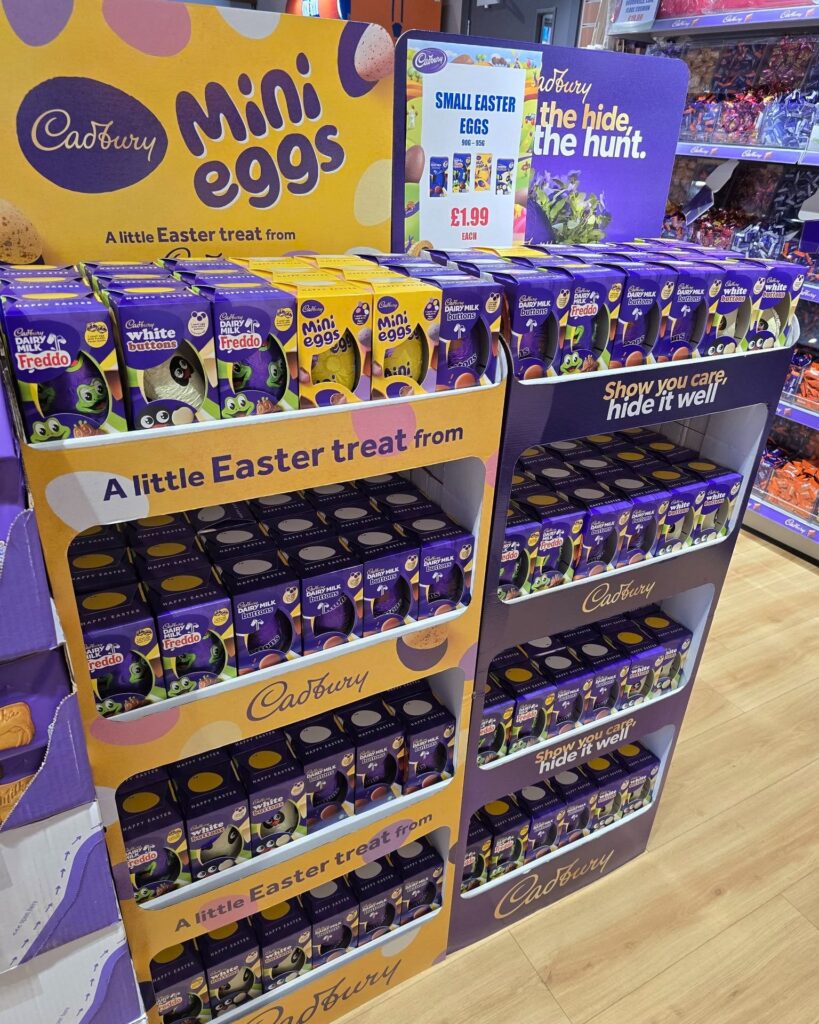
- Fragility Issues: Chocolate figures (bunnies, eggs) are hollow and easily crushed. Their value is entirely in their shape; if the "protection" fails, the product is worthless.
- The Transport Limit: You might have the stock and the people, but are there enough trucks? The market for freight tightens significantly during holiday peaks.
Co-Packing & Retail Challenges
- Display Readiness: Seasonal SKUs meant for secondary placements (displays/shippers) aren't ready when the co-packer needs them.
- Transit Damage: Fragile cardboard displays often arrive at the store destroyed, leading to poor "on-shelf" execution.
- The Customer Complaint: Retailers refusing to take seasonal labeled products too early — or too late — leaving you with stranded stock.
The Demand Pattern: The "Before" and the "After"
Forecasting must analyze the pattern of orders across several years to estimate the "Easter Curve."
- The Lead-Up: Key Accounts must feed Marketing activations and S&OP cycles with clear data on when the peak starts.
- The Post-Easter "Dip": For categories like sweets and chocolate, expect a slump. People have "leftover fatigue."
- The Post-Easter "Peak": For staples like dairy, fruit, and fresh ready-to-eat meals, there is often a massive "refill" peak as consumers replenish their empty fridges.
The Human Aspect: Changing Lifestyles
Easter planning isn't just about the holiday; it's about the break in routine.
- The School Effect: Kids leave school earlier. This causes an immediate drop in demand for products in vending machines and school kiosks.
- The Fresh Clear-Out: Distributors of fresh or dairy products will stop ordering much earlier to ensure they have zero waste during the "off" period.
- Remote Work & Travel: Many people take the days before Easter off or work remotely. If your product relies on "commuter traffic" (like office snacks or gym drinks), you must account for this migration.
Know Your Portfolio: The Three Types of Easter SKUs
Finally, remember that not all products are created equal during this time:
Seasonal SKUs (In-Outs): Pure holiday products (e.g., Lindt Gold Bunny). They must appear and then disappear instantly.

Seasonal Labeled SKUs: The same product inside, but with a festive "Easter coat" (e.g., baking soda with a rabbit on the pack).
High-Demand Staples: Standard SKUs that simply explode in volume due to tradition (e.g., ricotta in Italy or eggs in Poland).
Easter is a beautiful time for celebration. But for a professional planner, the real joy comes from a "Green KPI" dashboard on Tuesday morning, knowing that through collaboration and meticulous detail, the business went smoothly while everyone else was enjoying their break.
Wishing you all a happy Easter!