Shopping act becomes a "cluttered escape room"
Walk into a typical discount or grocery store in Poland today and something feels off almost immediately. Not because of pricing (maybe this can hit you if your last visit in PL was in 2003), not because of assortment — but because of space. Or rather, the lack of it.
Aisles are no longer corridors designed for flow; they have become obstacle courses. Cardboard displays rise unexpectedly at every turn, clip strips hang into walking paths, and promotional towers compete for every available square meter. The shopping act, once routine and almost automatic, turns into a careful navigation exercise.
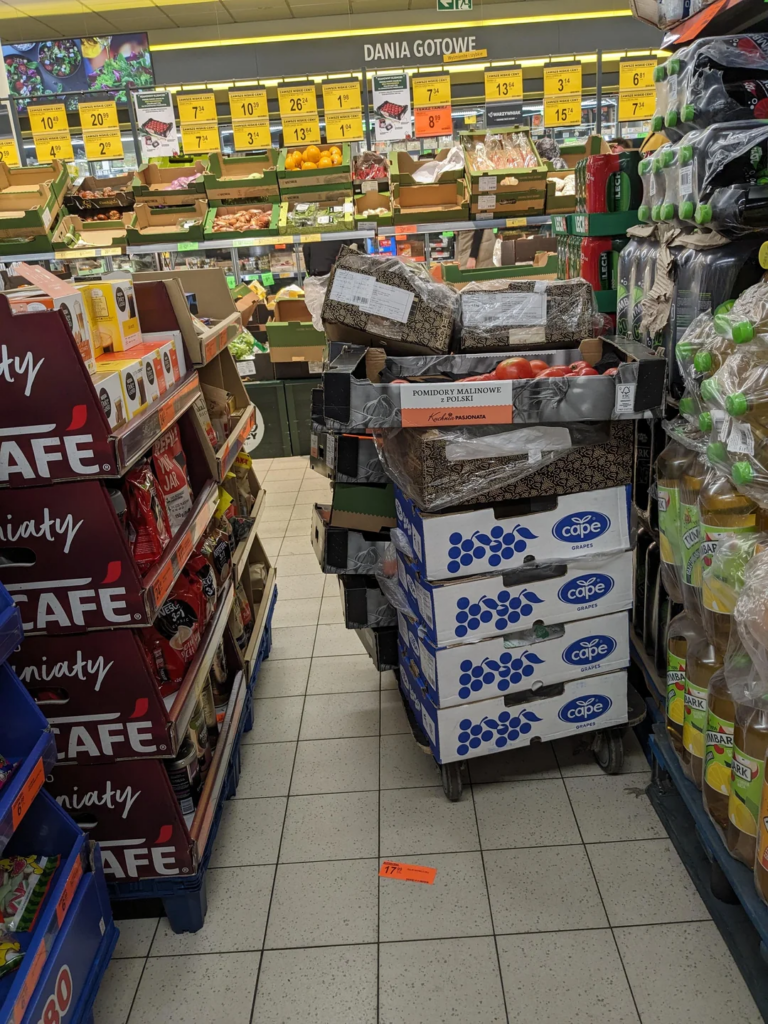
Picture source: reddit.com/r/Polska — "just a regular day at Biedronka"
The "Chaotic Floor" Syndrome
We often talk about the "Golden Zone" on a shelf, but in many Polish stores, the floor has become the new battlefield. When you see temporary displays (FSDUs/shippers) blocking every turn, it's usually because the store manager is caught between two fires: HQ-negotiated contracts that mandate these displays and a "backroom" that is already overflowing.
The sense of chaos is a psychological "stop sign" for shoppers. When a shopper has to physically protect their body or bag from knocking over a tower of energy drinks, their cortisol levels rise. A stressed shopper buys only what is on their list and flees, which is the exact opposite of what an extra exposition is supposed to achieve.
The Fridge vs. Ambient Paradox
Let's look at UHT milk or ambient beverages. Chilled square footage is the most expensive "real estate" in a store due to electricity and maintenance costs. Using it for products that don't require it (just to get a "double hit" of visibility) is a massive inefficiency for the store owner. It limits the assortment of high-margin, short-shelf-life innovations like plant-based yogurts, dairy products, fresh convenience meals, fresh-pressed juices, etc.
The Clip Strip "Infection"
The next observation is shelves covered with clip strips. Or rather clip strips everywhere. This is a symptom of "Micro-Space Greed." These strips are designed for cross-merchandising (e.g., batteries next to toys). However, when they are everywhere, they become "visual noise."
Taking a regular product from the shelf without disruption is almost impossible. They are the first things to get knocked down, creating the look of a "discount graveyard" rather than a professional retail environment.
This is an observation from just 1 visit in a small grocery store:
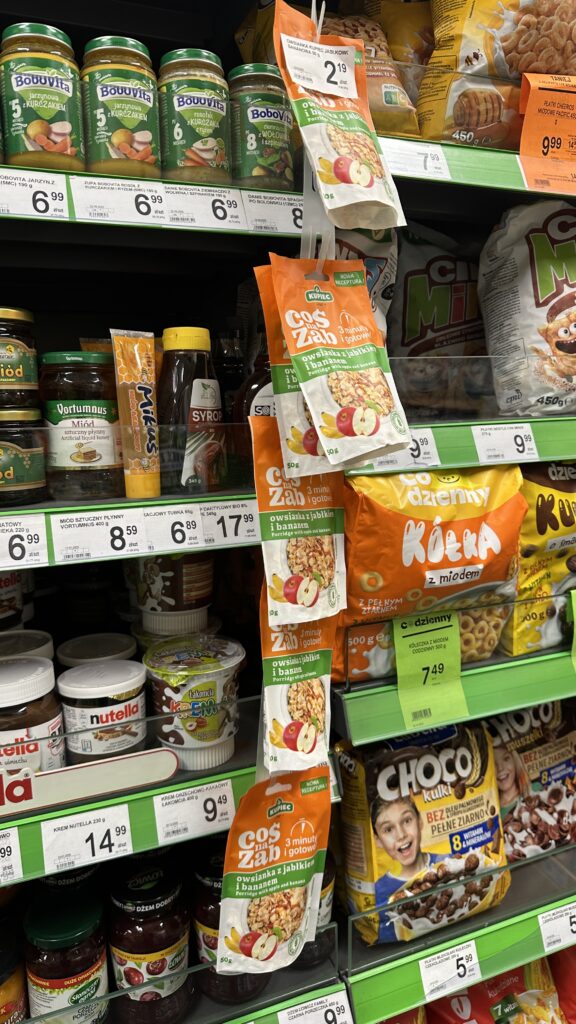
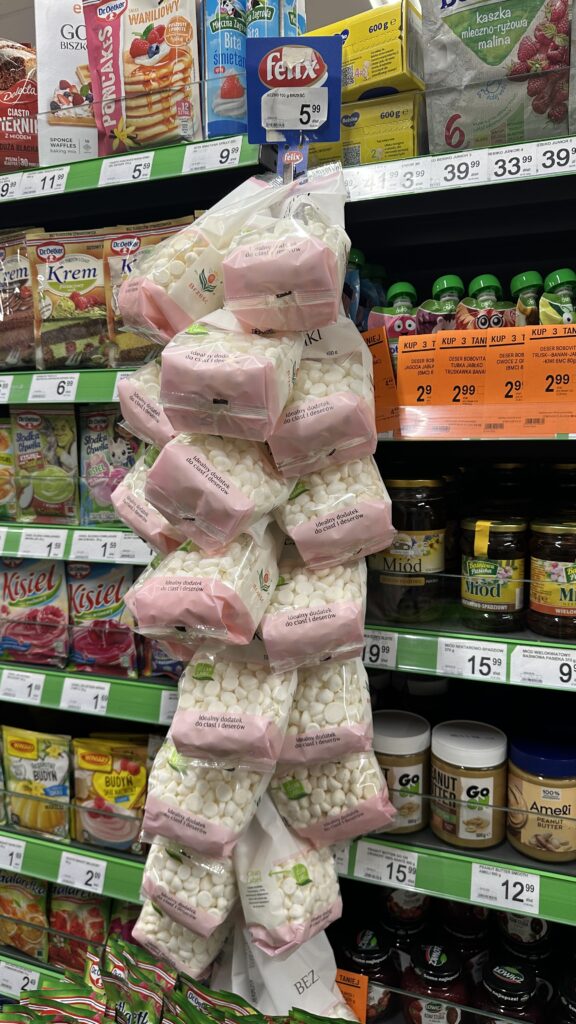
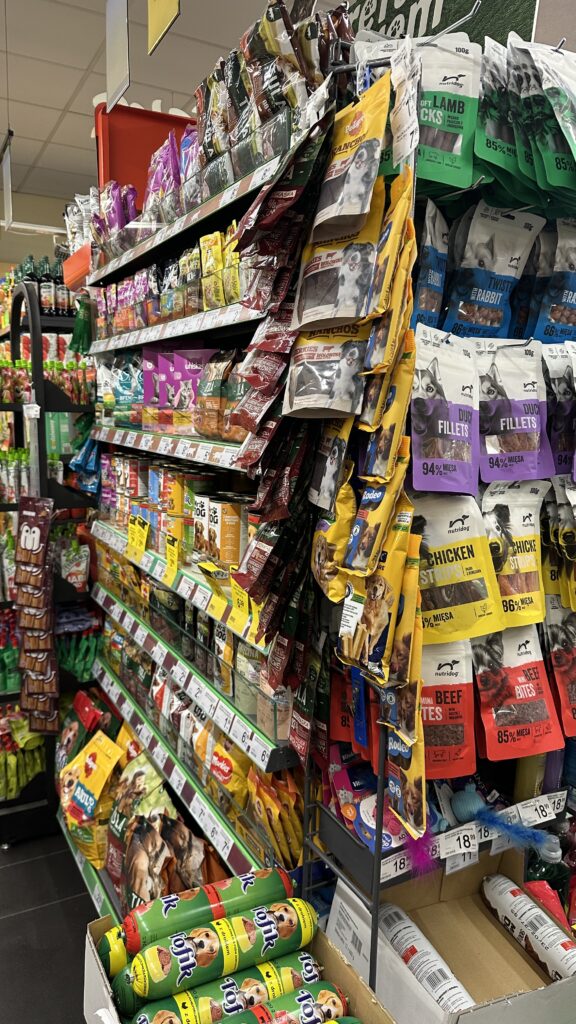
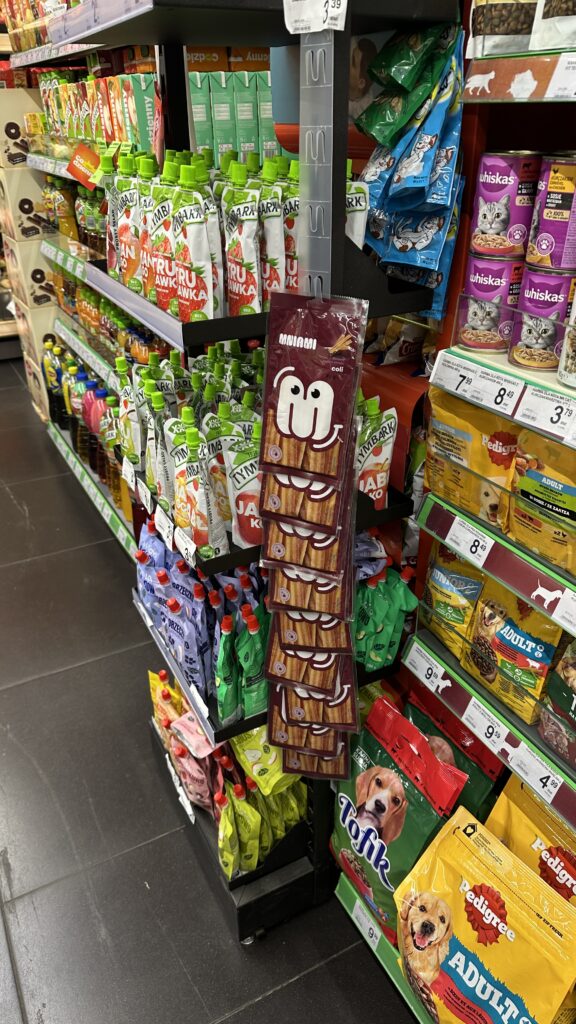
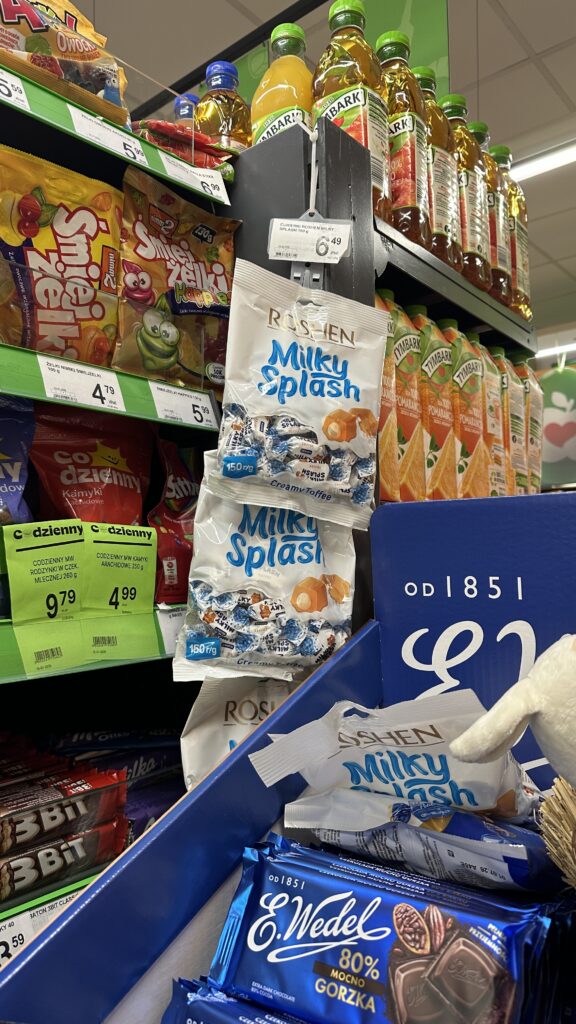
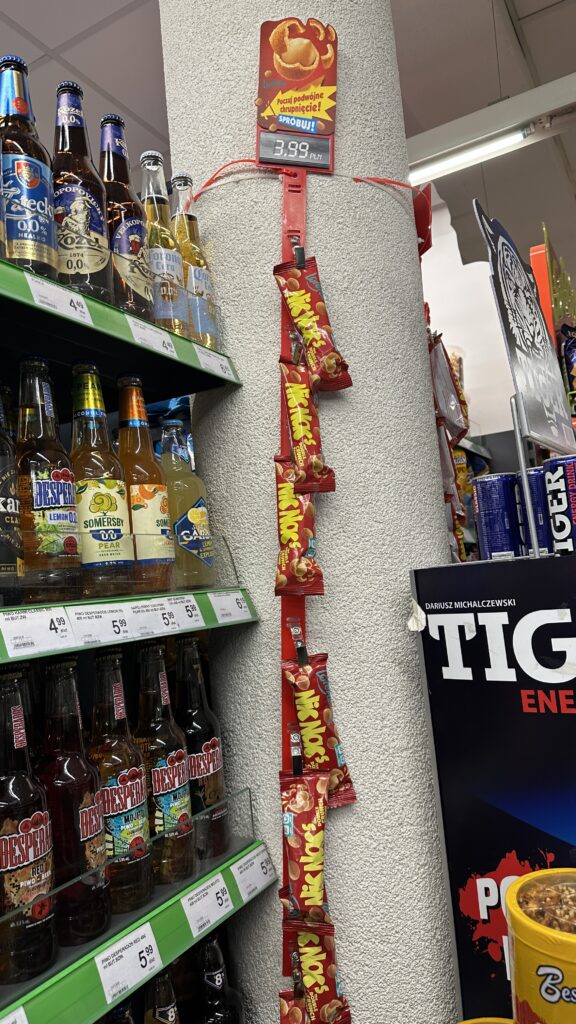
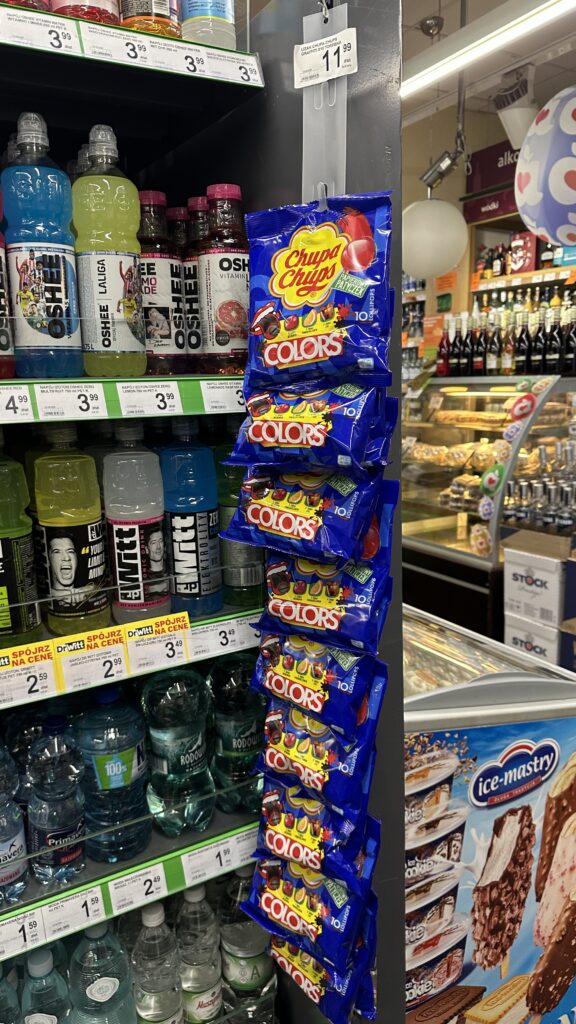
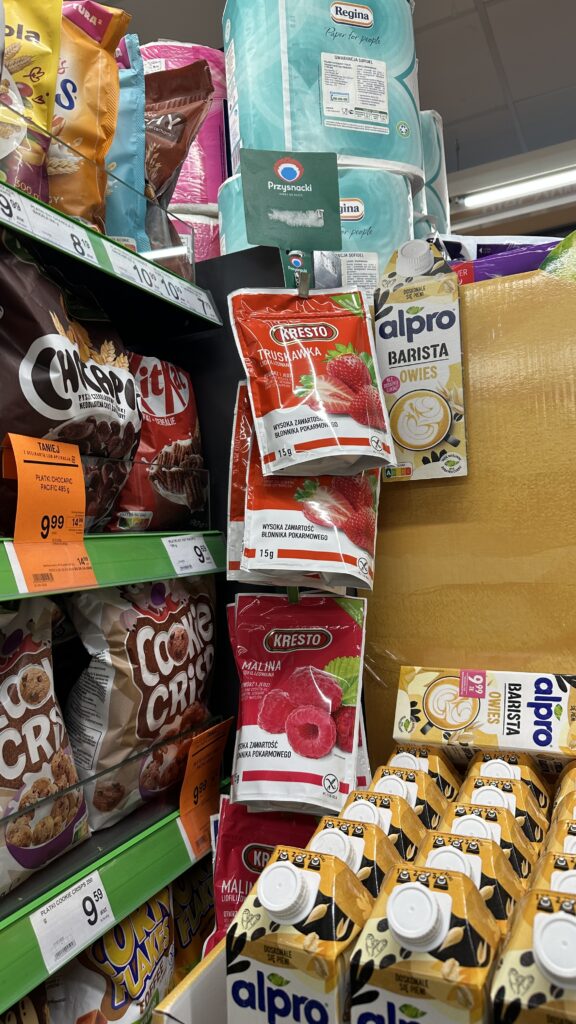
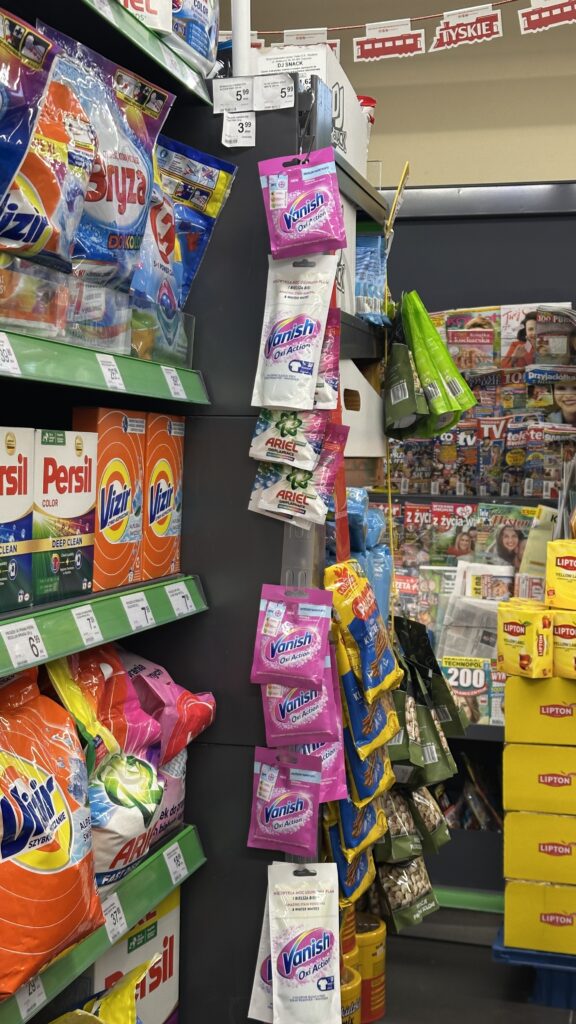
Oatmeal, mini meringues (this package is too large to hang this way!), pet food, jelly beans and pet food (isn't it affecting the quality of the product?), milky candies, crispy peanuts, lollipops, dried fruits, and fabric stain remover with bread sticks (this shocked me!)
If you pay attention to two of those examples, we already see a cardboard display blocking shelf access (pictures of milky candies and dried fruits).
Who Needs to Intervene?
This issue probably could be solved only by one of these:
The Fire Marshal (Straż Pożarna): This is the most immediate lever. Polish health and safety (BHP) and fire regulations are quite strict regarding the minimum width of evacuation routes. If a store's "extra expositions" reduce a corridor below the legal limit (often 1.2m to 2.0m depending on store size), they are in violation. More frequent inspections would force retailers to clear the "death traps" they've built out of cardboard and plastic.
Retail HQ (Category Managers): The "Commercial Team" needs to start talking to the "Operations Team." Currently, HQ sells the floor space to producers without checking if the physical store can actually hold it. They need to implement "Display Caps" — a hard limit on the number of secondary placements allowed per square meter.
The Consumer (The Power of the Wallet): If shoppers move their loyalty to stores that prioritize "breathable" shopping, the cluttered stores will see their "Time in Store" metric drop, which eventually forces a change in strategy. As people underestimate the risk of potential accidents due to overcrowded stores and they are looking for every opportunity to buy at the lowest prices, I think it is not likely to happen.
We are reaching a tipping point. What is going to happen if stores continue to prioritize "temporary stimulus" over "basic navigation"? Will they lose the modern shopper who values time and comfort over seeing the same UHT in four different places? Or will the lowest price always win no-matter-what?